
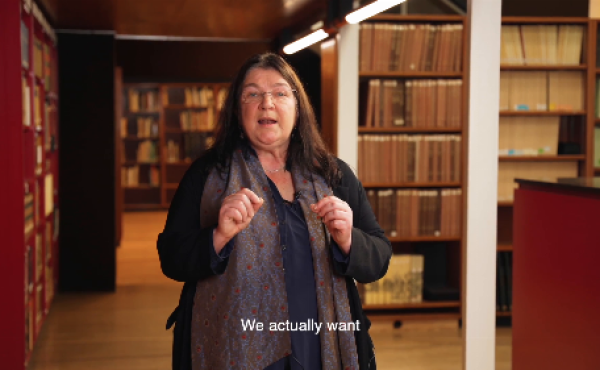
The subtle nuances that Spilliaert applies, which are so important, so essential, must be preserved. Paper is a fascinating material, found in all cultures, and serves as the bearer of a vital part of our written and artistic heritage. But paper is a plant-based material, which makes it particularly vulnerable. (...) So how long do we display a Spilliaert? We do so for three months, at 50 lux, eight hours a day. And then we let it rest for three years. (...) After all, we must ensure that future generations can experience and enjoy the artwork in the same way."
Prof. Dr. Lieve Watteeuw is an art historian and paper conservator, and Professor at KU Leuven. She specializes in the material study and conservation of graphic art and paper-based cultural heritage, with a particular focus on sustainable collection care. With over thirty years of experience, she integrates hands-on restoration practice with academic expertise in conservation ethics. Her work explores innovative approaches to documenting, exhibiting, and safeguarding fragile artworks for the future. She contributes to the FRIABLE research project with the study on Léon Spilliaert and serves as a member of the Topstukkenraad (Masterpieces Council), advising on cultural heritage policy in Flanders.
* The Topstukkenraad considers the masterpieces by Spilliaert in the Mu.ZEE collection to be extremely fragile. In order to spread the aging process out even further in time, Mu.ZEE applies longer resting periods than the general guidelines of the Topstukkenraad as mentioned in the video-interview.